


You’ve seen it. The person at a party whose forehead doesn’t move when they laugh. The celebrity on a red carpet who looks perpetually startled. The coworker who used to have expressive eyes suddenly… doesn’t. The “frozen” look is arguably the most common fear people have when they’re considering Botox injections, neurotoxin treatment, or any kind of wrinkle relaxer, and honestly? That fear is valid. It happens. But here’s the thing: it doesn’t have to.
When administered by a skilled injector who understands facial anatomy and respects your natural movement, Botox looks nothing like a mask. It looks like you, just more rested, refreshed, and quietly glowing. At Duluth Med Spa, that’s exactly the kind of result we’re after.
So What Actually Causes the Frozen Look?
Let’s get into it, because understanding why it happens is the first step to making sure it never happens to you.
Botox, technically called botulinum toxin type A, is a neurotoxin treatment that works by temporarily blocking the nerve signals that cause muscles to contract. When those muscles can’t contract as forcefully, the overlying skin smooths out. Forehead lines soften. Frown line injections between the brows relax. Crow’s feet around the eyes fade. Done well, the effect is subtle and gradual. Done poorly — or overdone — the result is a face that struggles to move naturally.
The frozen look almost always comes down to a few culprits:
- Too many units in the wrong places. More isn’t always better. Overloading certain muscles can completely eliminate movement rather than simply softening it.
- Incorrect injection depth. Botox needs to land at the right level within the muscle tissue. Too shallow or too deep, and it either spreads unpredictably or doesn’t perform as expected.
- Ignoring the individual’s anatomy. Every face is different. The muscle placement, skin thickness, and natural expression patterns of one person are not the same as the next. Cookie-cutter injection maps are a setup for cookie-cutter (read: unnatural) results.
- Chasing “zero movement” as the goal. Some injectors — and some patients — mistakenly equate total immobility with success. It’s not. The goal is controlled movement: less intensity, not complete paralysis.
- Not accounting for asymmetry. Most faces are naturally asymmetric, and an injector who ignores this will create results that look off even if technically correct on paper.
The Role of Injection Technique — And Why It’s Everything
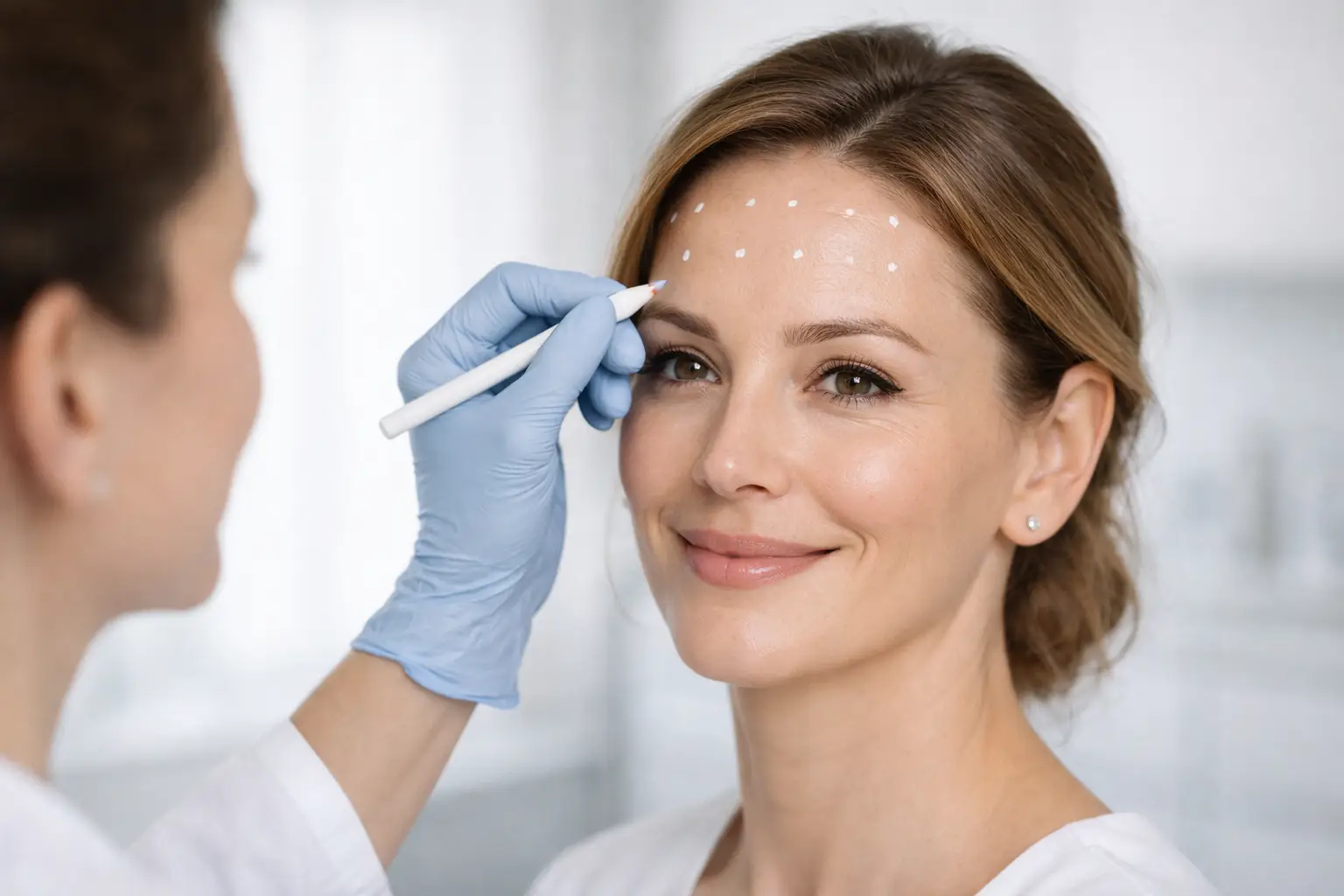
Here’s where things get nuanced. Botox isn’t just Botox. The formula itself is relatively standardized; what varies wildly is the person holding the syringe. Injection technique encompasses where you inject, how deep, at what angle, with how many units, and in what pattern — and each of those variables affects the outcome dramatically.
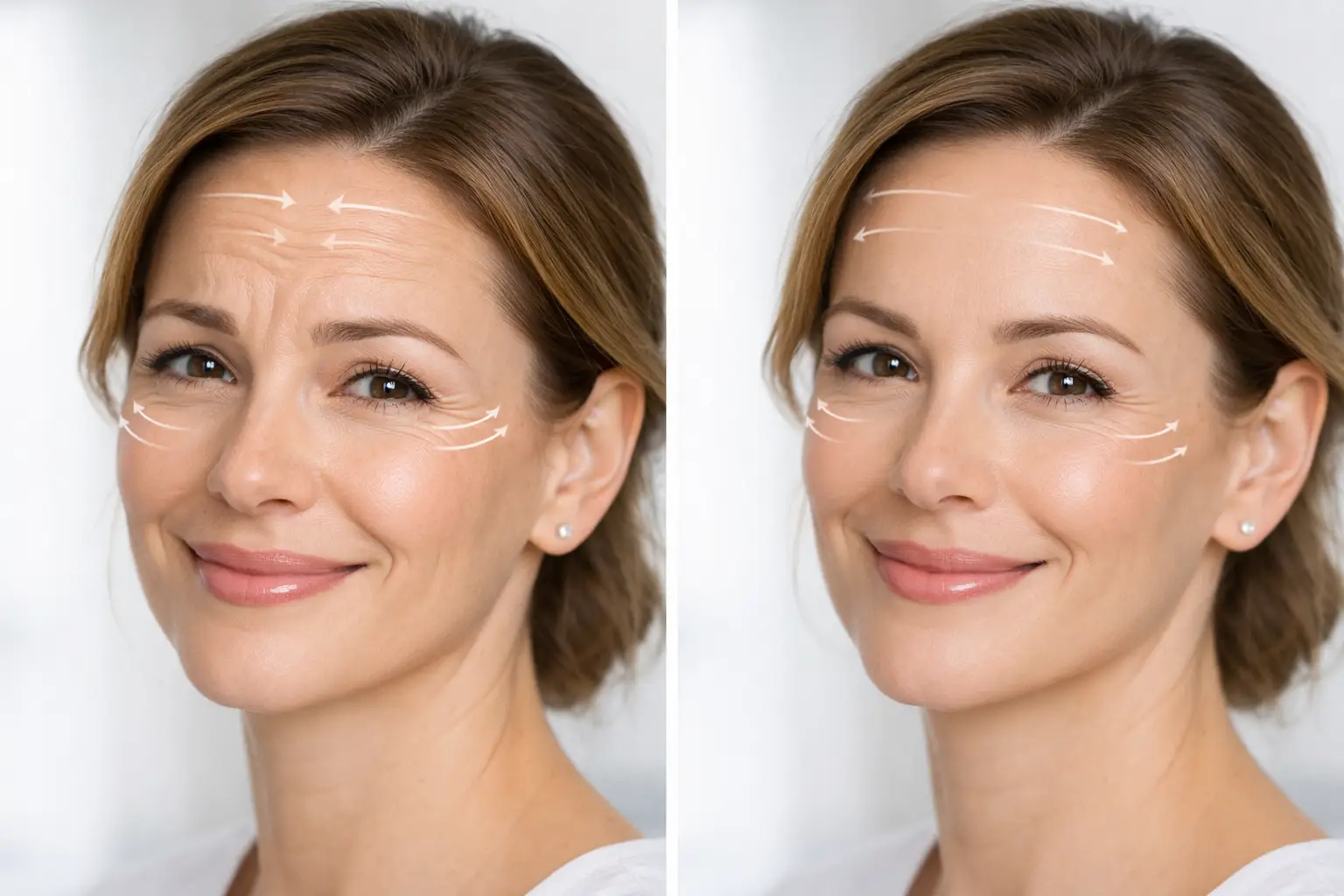
Take forehead lines, for example. The frontalis muscle (responsible for forehead movement) is large and works in opposition to the muscles that pull the brow downward. If you inject too aggressively across the entire forehead without accounting for brow position, you can end up with a heavy, droopy brow — that classic “too much Botox” look. The fix is strategic dosing: softening the upper portion of the muscle while preserving enough activity lower down to maintain a natural brow arch.
Or consider Botox crow’s feet treatment around the eyes. The orbicularis oculi muscle creates those fan-like lines when you smile. A heavy-handed approach here eliminates the crinkle entirely — which sounds appealing in theory, but looks deeply strange in real life. A smile without any eye movement reads as flat, even unsettling. The better approach is gentle reduction: fewer units, placed to soften without erasing.
Frown line injections in the glabellar region (the “11s” between the brows) follow similar logic. Yes, you want to relax those muscles. But you also want to preserve the ability to make subtle facial expressions — to furrow slightly when you’re concentrating, to convey emotion naturally. A skilled injector isn’t trying to erase your face. They’re editing it.
What a Proper Consultation Looks Like
One thing that separates a great Botox experience from a regrettable one is what happens before the needle ever touches your skin. A thorough consultation should include:
- A full assessment of your facial anatomy at rest and in motion
- A conversation about which areas you’d like to address — and which you’d prefer to leave alone
- Discussion of how many units are appropriate for your muscle mass and lifestyle
- Honest input from your injector about what’s realistic and what might backfire
- A review of your history with neurotoxin treatments, if any, and how your muscles have responded in the past
At Duluth Med Spa, consultations aren’t a formality — they’re where the real work begins. Understanding what you actually want (and what you don’t) shapes every injection decision that follows.
Maintenance: The Key to Staying Natural Over Time
Here’s a truth that doesn’t get talked about enough: Botox results are cumulative and dynamic. How you maintain your treatments over time affects how you look just as much as any single session.
Most wrinkle relaxer treatments last somewhere between three and five months, depending on the product used, the area treated, your metabolism, and how active the muscles are. Coming in for regular maintenance — before the neurotoxin has fully worn off — actually allows your injector to use less product over time, because the muscles have been in a softened state consistently. This often means more natural-looking results and lower doses in the long run.
Waiting too long between appointments, on the other hand, means the muscles return to full strength and the whole cycle restarts. Not harmful, but it can make it harder to maintain that seamless, natural baseline.
The “frozen” look is also more common when people overcorrect after a disappointing result, stacking extra units on top of an area that simply needed time or a slightly adjusted approach. Patience and communication with your provider matter.
You Should Still Look Like You
The best Botox is the kind nobody can quite put their finger on. Not “she got Botox” — just “she looks amazing.” That outcome isn’t luck. It’s the result of a knowledgeable provider, the right technique for your unique face, and a shared goal of enhancement rather than erasure.
Whether you’re curious about forehead lines, considering Botox crow’s feet treatment, or finally ready to address those frown line injections you’ve been thinking about for two years — the most important thing you can do is choose your injector thoughtfully. Because Botox injections and neurotoxin treatment done well is one of the most effective tools in aesthetic medicine. And done with skill and intention at Duluth Med Spa it never has to look like anything other than the best version of yourself.
Ready to talk technique? Book a consultation with our team and let’s figure out exactly what your face needs.


