
Medically Reviewed by Dr. Christopher Delp
You shouldn’t need a law degree to feel comfortable asking about weight loss treatment. Yet an offer for compounded semaglutide can leave you wondering whether “available to order” really means “permitted to prescribe and dispense.”
Compounded semaglutide can be lawful in limited circumstances in 2026, but there’s no blanket permission to sell copies of available FDA-approved drugs. The FDA’s compounding framework depends on specific conditions, not just a prescription. Keep reading for nine points that explain the distinction and help you approach your next appointment with better questions.
1. Compounded Isn’t Generic
Start by separating three terms that can sound interchangeable. Compounded, generic, and brand-name medications don’t follow the same approval pathway.
The FDA’s compounding overview explains that compounded drugs aren’t FDA-approved. Unlike approved generic drugs, they haven’t undergone FDA review establishing the product’s safety, effectiveness, and quality before marketing. A compounded product doesn’t become an approved generic simply because it contains semaglutide.
Compounding can serve patients who need something an approved medicine can’t provide. The FDA gives examples such as removing an ingredient a patient is allergic to or preparing a different dosage form when medically necessary. Those examples describe compounding generally, not automatic permission for any semaglutide formulation.
Ask your provider to name the exact product being considered. Understanding what it is comes before deciding whether its legal basis, clinical purpose, and pharmacy source make sense for your situation.

2. The Shortage Rules Changed
The shortage-era explanation doesn’t automatically apply to a prescription offered today. The FDA determined that the nationwide semaglutide injection shortage was resolved on February 21, 2025.
Temporary enforcement allowances followed, but they ended in 2025. For traditional 503A compounders, the relevant period ended after the April 24 court decision. The allowance for 503B outsourcing facilities ran through May 22.
More recently, the Fifth Circuit’s August 27, 2026 decision upheld the judgment supporting FDA’s removal of semaglutide injections from the shortage list. That ruling didn’t reopen the shortage-based exception.
An older post about an ongoing lawsuit may therefore give you the wrong impression. Check the date before treating it as current guidance. Under the FDA’s shortage rules, difficulty finding medication at one pharmacy doesn’t, by itself, recreate a nationwide shortage exception.
3. Personalization Needs a Reason
A prescription with your name on it isn’t the whole legal explanation. One important pathway involves the patient-specific framework under section 503A, commonly used by state-licensed compounding pharmacies.
The FDA’s 503A guidance restricts regular or excessive compounding of products that are essentially copies of commercially available drugs. A formulation change can fall outside that copy definition when the prescriber determines that it produces a significant difference for an identified patient and documents that determination.
All other applicable requirements still matter. Documentation of a difference isn’t permission to ignore ingredient restrictions, quality requirements, or state law.
Section 503A also leaves limited room for copying that isn’t regular or excessive. That narrow provision doesn’t permit a routine copy-based program. The other conditions still apply, so a pharmacy should identify the actual legal basis for your prescription rather than simply saying that some compounding remains possible. You can request that explanation in writing.
Ask your prescriber what specific need the proposed change addresses. You don’t need to write the medical justification yourself or arrive with language from an advertisement. The assessment should come from your actual history and the clinician’s judgment, not a standard explanation applied to everyone who signs up.
4. Bulk Supply Has Different Rules
The pharmacy’s operating category matters, too. Section 503B covers FDA-registered outsourcing facilities, which face separate conditions from the patient-specific framework described above.
Under the FDA’s bulk-substance rules, outsourcing facilities generally need the ingredient on the 503B bulks list or the drug on FDA’s shortage list to compound from bulk ingredients. FDA states that semaglutide is on neither list. A patient-specific explanation doesn’t remove that separate restriction.
In April 2026, FDA proposed not adding semaglutide, tirzepatide, and liraglutide to the 503B bulks list. That announcement was a proposal, not a new blanket ban on every form of compounding. It also wasn’t permission to continue bulk production while comments were considered.
Ask which framework your pharmacy operates under. FDA-registered describes a facility’s status; it doesn’t establish that every product it prepares qualifies under the rules.
5. Price and Add-Ins Aren’t Passes
Affordability deserves an honest conversation, but it isn’t the same as a qualifying formulation change. The FDA’s 503A guidance specifically says a lower price doesn’t establish that a compounded product falls outside the copy restriction.
Adding a vitamin isn’t an automatic exception either. In its April 2026 clarification, FDA explains that certain semaglutide and vitamin B12 combinations may still count as copies. The actual formulation and documented patient-specific difference matter.
A useful question is: “What does this change do for my medical needs that an available approved product doesn’t?” Ask for a clear explanation rather than assuming that words such as customized or personalized settle the issue.
You can still raise insurance limitations and budget concerns. Keep those discussions separate from the clinical and legal reasons for choosing a compounded preparation, so each concern gets an accurate answer.
6. Check the Actual Ingredient
An ingredient name deserves more attention than a reassuring product description. Ask what form of semaglutide the pharmacy uses, rather than accepting “it’s the same ingredient” without clarification.
The FDA warns against semaglutide sodium and semaglutide acetate. These salt forms are different active ingredients from the one used in approved drugs. The agency says it isn’t aware of a lawful basis for their use in compounding.
Using semaglutide base doesn’t, by itself, establish compliance with every other requirement. Ingredient identity is one part of the review, not a substitute for it.
FDA also advises patients not to purchase products falsely sold for research purposes or labeled “not for human consumption.” A seller providing injection instructions doesn’t turn a research-labeled product into an appropriate prescription medicine. Bring any unfamiliar label or ingredient description to your clinician before using it.
7. Verify Who Fills It
Knowing the website where you ordered isn’t the same as knowing the pharmacy behind your medication. Request the pharmacy’s full name and contact details before completing a purchase.
The FDA’s BeSafeRx guidance recommends checking whether an online pharmacy requires a prescription, has a licensed pharmacist available, and holds appropriate state licensure. Use those points to guide your questions:
- Who prepares the medication? Ask for the compounding pharmacy’s identity, not just the prescribing platform’s name.
- Can I verify its license? Check the relevant state board of pharmacy rather than relying only on a website badge.
- Who answers medication questions? Get a pharmacist’s contact information and ask how concerns are handled after delivery.
Licensure is an important check, but it doesn’t replace the product-specific legal review. Ask your prescribing team to explain both, particularly when several companies are involved in your care.
8. Keep Safety in the Conversation
A legal explanation doesn’t replace instructions you can confidently follow. Before using a compounded injection, ask your pharmacist to walk you through the label, syringe, and prescribed amount.
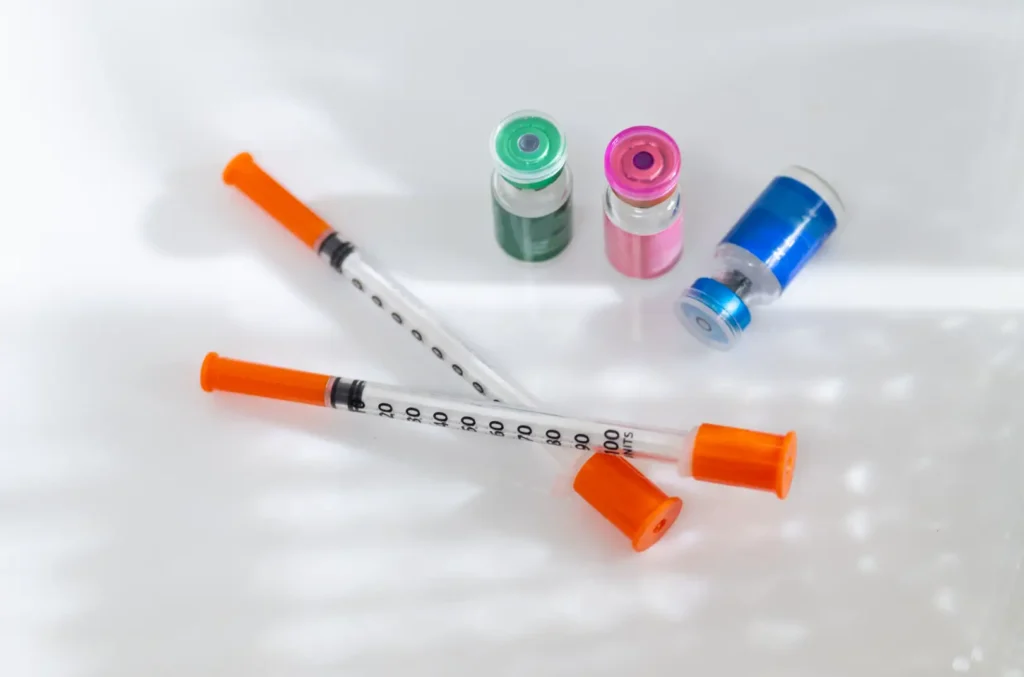
The FDA has reported dosing errors involving compounded injectable semaglutide, including cases requiring hospitalization. Different concentrations and confusion between milligrams, milliliters, and syringe units have contributed to mistakes.
Don’t transfer instructions from an old vial to a new one without confirmation. Ask the pharmacist to verify the concentration, demonstrate the correct measurement, and explain storage and discard instructions. A photograph of the label can help you describe the product accurately during a call.
Also ask whom to contact about side effects or suspected dosing errors. You deserve an answer before an unexpected problem occurs, not a search through messages while you’re feeling unwell.
9. Plan Before Your Next Refill
Changes in availability are easier to discuss before your medication runs out. Ask your prescribing team whether the next refill remains appropriate and available under current requirements.
The NIDDK’s prescription weight management overview describes FDA-approved treatment options and factors that guide selection. Your health history, other medicines, potential side effects, and cost belong in that conversation.
A transition plan should address what you’ll take, when you’ll start, and how follow-up will work. Don’t switch products, alter your dose, or stretch your schedule without instructions from your prescriber.
Make room for practical concerns as well. Tell the team about travel, upcoming appointments, or delays you’ve already experienced. You shouldn’t have to choose between asking questions and keeping your care organized, and you don’t need to solve a supply problem by ordering from an unfamiliar seller.
Choose Clarity Over Guesswork
The question is compounded semaglutide legal? deserves an answer tied to the actual prescription, not a general sales promise. Your next step should be a conversation you understand.
Schedule a consultation with Duluth Med Spa in Duluth, MN, to discuss FDA-approved weight management options and whether any patient-specific alternative is appropriate and available under applicable requirements. Bring your health history and questions about sourcing, safety, and continuity of care.
Connect with us today!
References
U.S. Food and Drug Administration. Compounding When Drugs Are on FDA’s Drug Shortages List.
U.S. Food and Drug Administration. Compounding and the FDA: Questions and Answers.
U.S. Food and Drug Administration. FDA Clarifies Policies for Compounders as National GLP-1 Supply Begins to Stabilize. April 1, 2026 update and prior notices.
U.S. Court of Appeals for the Fifth Circuit. Outsourcing Facilities Association v. FDA, No. 25-10758. August 27, 2026. Opinion reproduced by Justia.
U.S. Food and Drug Administration. Compounded Drug Products That Are Essentially Copies Under Section 503A: Guidance for Industry. January 2018, particularly pages 8-9.
U.S. Food and Drug Administration. Bulk Drug Substances Used in Compounding Under Section 503B.
U.S. Food and Drug Administration. FDA Proposes to Exclude Semaglutide, Tirzepatide, and Liraglutide on the 503B Bulks List. April 30, 2026.
U.S. Food and Drug Administration. FDA’s Concerns with Unapproved GLP-1 Drugs Used for Weight Loss.
U.S. Food and Drug Administration. Considering an Online Pharmacy?.
U.S. Food and Drug Administration. Dosing Errors Associated with Compounded Injectable Semaglutide Products.
National Institute of Diabetes and Digestive and Kidney Diseases. Prescription Medications to Treat Overweight & Obesity.