

Medically Reviewed by Dr. Christopher Delp
Wellness can get complicated when your body doesn’t seem to recover as quickly as it used to. A hard workout lingers longer, an old injury becomes more noticeable, sleep isn’t as restorative, or you simply feel that bouncing back takes more effort.
Those experiences have helped put peptide therapy into the wellness conversation, with compounds such as BPC-157, sermorelin, KPV, and TB-500 frequently discussed for recovery and related goals. The excitement, however, has moved faster than the human evidence for several of these compounds. Some peptides have interesting laboratory or animal research behind them, while human safety and effectiveness data remain limited or absent
That distinction deserves more attention than the latest wellness trend. This peptide therapy guide breaks down what these peptides are, what researchers are actually investigating, and why medically guided decision-making matters.
What Science Tells Us About Peptides and Recovery
Peptides aren’t one single treatment category where every compound does the same thing. They are short chains of amino acids that can act as biological signals, and each peptide has its own mechanism, evidence base, regulatory status, and unanswered questions.
1. Peptides Already Exist Throughout Your Body
The word “peptide” can make a treatment sound artificial or futuristic, but peptides occur naturally throughout human biology. They participate in many signaling processes and can influence functions ranging from hormone activity to cellular communication. That doesn’t mean every peptide sold for wellness has been proven safe or effective.
The source of confusion is that “peptide” describes a type of molecule rather than a guarantee of therapeutic value. Some peptide-based medications have undergone extensive clinical testing and received FDA approval for specific indications. Others remain experimental compounds supported largely by preclinical research. That’s why asking, “Does peptide therapy work?” is too broad.
A better question is: Which peptide are we discussing, what outcome is it supposed to improve, and what quality of evidence supports that use? Those questions become particularly important when exploring peptides for recovery.

2. BPC-157 Has Generated Interest, but Human Evidence Is Limited
BPC-157 may be one of the most talked-about recovery peptides online. You’ll find discussions connecting it with tendons, muscles, gastrointestinal tissue, wound healing, and injury recovery. The scientific picture is much less settled.
Much of the interest in potential BPC-157 benefits comes from laboratory and animal research rather than large, well-controlled human clinical trials. Preclinical studies have explored tissue repair and other biological effects, but animal findings can’t automatically be translated into proven benefits for people.
Its regulatory status deserves equal attention. The FDA has evaluated BPC-157-related bulk drug substances in the compounding context and has raised concerns about potential immunogenicity, aggregation, peptide-related impurities, and limited human safety information.
FDA materials from its July 2026 Pharmacy Compounding Advisory Committee review likewise noted that the agency lacked information demonstrating that BPC-157 does not present these potential risks. That doesn’t mean every early scientific observation is meaningless.
It means claims that BPC-157 has been proven to heal injuries, rebuild tendons, or dramatically accelerate human recovery go beyond what the current evidence can establish.
3. Recovery Research Isn’t the Same as a Recovery Guarantee
The language surrounding experimental peptides often jumps from “researchers are studying this” to “this heals injuries.” Those are very different statements.
Preclinical findings are valuable because they help researchers decide what deserves further investigation. They can reveal mechanisms, generate hypotheses, and help establish whether human studies may be worthwhile.
But clinical questions require clinical evidence. Does the treatment meaningfully shorten recovery in people? What dose would provide a benefit? Which patients might respond? What adverse effects occur? Are there long-term risks? How does it compare with established treatments?
Those questions require well-designed human trials. For BPC-157 in particular, FDA has said it has limited safety-related information for proposed routes of administration and has raised potential concerns involving immune responses and peptide impurities.
A responsible discussion of recovery should therefore leave room for scientific interest without presenting possibility as established fact.
4. Sermorelin Works Through a Different Pathway
Sermorelin belongs in a different conversation from peptides marketed primarily around tissue repair. It is an analogue of growth hormone-releasing hormone. Rather than supplying growth hormone itself, sermorelin stimulates the pituitary gland through the growth hormone-releasing hormone pathway.
That’s why sermorelin therapy is sometimes discussed in wellness settings around growth hormone signaling, body composition, sleep, or recovery. Again, mechanism isn’t the same thing as proof of broad wellness benefits.
Sermorelin has a regulatory history that differs from newer experimental recovery peptides, but products currently marketed for wellness shouldn’t automatically be assumed to be FDA-approved for anti-aging, athletic recovery, or general optimization. FDA has issued enforcement actions involving unapproved sermorelin products sold in the United States.
Compounded injectable products also introduce another layer of consideration because compounded drugs aren’t FDA-approved. FDA doesn’t review them before marketing for safety, effectiveness, or manufacturing quality in the same manner as approved medications. That makes sourcing and medical oversight especially important.
5. Growth Hormone Signaling Isn’t Something to Chase Blindly
It can be tempting to hear “growth hormone” and immediately associate it with better muscle growth, faster recovery, younger-looking skin, or increased energy. Human physiology isn’t that simple.
Growth hormone and insulin-like growth factor 1, or IGF-1, participate in important biological processes. Altering these pathways can have effects beyond whichever wellness goal brought a patient to the consultation. That’s why more isn’t automatically better.
A medically responsible conversation around sermorelin should consider the patient’s health history, medications, symptoms, goals, and reasons for considering therapy. It should also cover what is known and what remains uncertain about the intended use. Patients should be particularly cautious about products purchased independently online.
The FDA has taken action against online sellers marketing unapproved peptide products, including sermorelin. A website calling something “research grade” or using scientific-looking language doesn’t establish pharmaceutical quality or suitability for human use.
Medical supervision matters because manipulating a biological pathway deserves more thought than ordering a wellness supplement.
6. KPV Is Interesting, but Human Data Are Extremely Sparse
KPV is another peptide that has gained attention in recovery and inflammation-related conversations. KPV is a short peptide fragment associated with alpha-melanocyte-stimulating hormone. Preclinical research has generated interest in its potential anti-inflammatory activity, which is why discussions sometimes extend to tissue recovery, inflammatory conditions, or gastrointestinal wellness.
This is an area where restraint matters. The FDA states that it hasn’t identified human exposure data for drug products containing KPV administered by any route and lacks important information needed to understand whether KPV could cause harm in humans.
In July 2026, KPV-related bulk drug substances were among those reviewed by the FDA’s Pharmacy Compounding Advisory Committee, with wound healing and inflammatory conditions among the uses evaluated. That evaluation shouldn’t be mistaken for FDA approval or confirmation that KPV effectively treats those conditions.
For patients, the takeaway is straightforward. KPV may be scientifically interesting, but claims that it is a proven human recovery treatment currently run ahead of the clinical evidence.
7. TB-500 Needs the Same Scientific Caution
TB-500 is frequently grouped with BPC-157 in online discussions about injury recovery. It is commonly described as a fragment related to thymosin beta-4, a naturally occurring peptide involved in cellular processes. Preclinical work around thymosin beta-4 biology has helped create interest in tissue repair and wound healing.
But TB-500 itself shouldn’t inherit every finding involving full-length thymosin beta-4. That’s an important distinction. FDA information regarding the thymosin beta-4 fragment, also known as TB-500, states that the agency hasn’t identified human exposure data for drug products containing the fragment and lacks important safety information. Potential concerns include immunogenicity and peptide-related impurities.
The FDA’s July 2026 advisory committee specifically evaluated TB-500-related bulk drug substances in connection with nominated wound-healing use. Again, being evaluated isn’t equivalent to being approved as a recovery treatment.
So while TB-500 frequently appears on lists of peptides for recovery, its popularity shouldn’t be confused with a robust human evidence base.
8. “Stacking” Peptides Doesn’t Automatically Improve Recovery
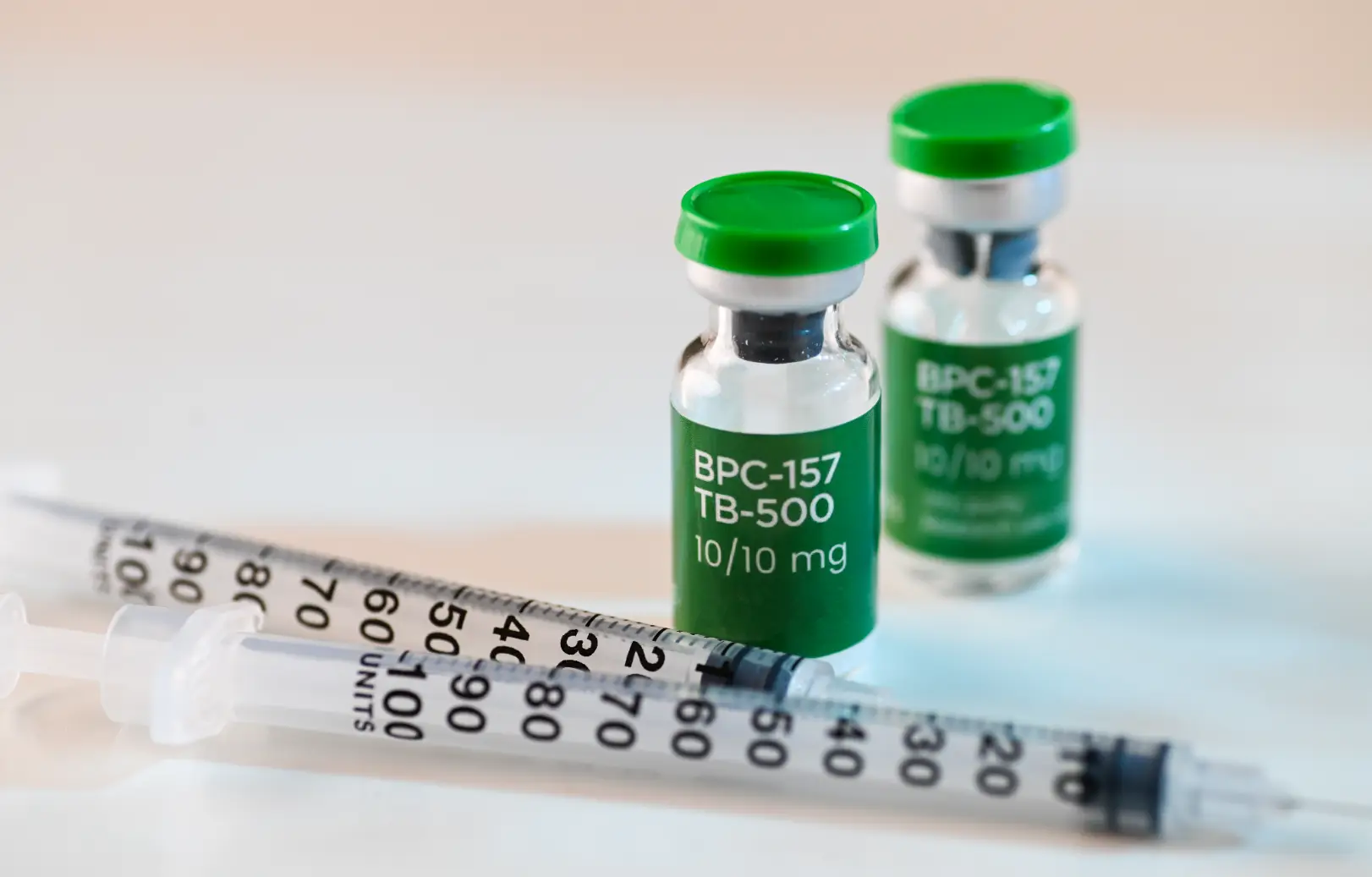
If one peptide sounds promising, using several together may seem even more appealing. That’s not how evidence works. Combining BPC-157, KPV, TB-500, sermorelin, or other compounds doesn’t automatically produce a stronger or more comprehensive recovery effect.
In fact, when individual compounds have limited human data, combining them can make benefits, side effects, and interactions even harder to interpret. Suppose someone begins several therapies simultaneously and develops an unexpected symptom.
Which compound caused it? Was it the dose? Was there an interaction? Was the symptom unrelated? The same problem appears when the patient improves. Without controlled evidence, it’s difficult to know which intervention contributed or whether natural healing, physical therapy, improved sleep, reduced training load, or another factor deserves the credit.
More treatments can sometimes create more uncertainty rather than better medicine.
Build Recovery Around You
Wellness isn’t about collecting the newest therapies. It’s about understanding what your body needs and choosing interventions with a clear purpose. Peptide therapy continues to attract attention for recovery, and compounds such as BPC-157, sermorelin, KPV, and TB-500 offer interesting areas of scientific discussion, but their evidence and regulatory status aren’t interchangeable.
At Duluth Med Spa in Duluth, MN, patients can start with a personalized conversation about their recovery goals, health history, and available options. A provider-guided approach can help put emerging therapies into proper context while keeping safety, evidence, and the fundamentals of recovery at the center of the plan.
Contact us today to book your consultation!