

By Christopher Delp, MD, Medical Director, Duluth Med Spa. In practice since 1992.
Last reviewed: July 2026
Patients call us regularly after being turned away somewhere else. The reaskon is almost always the same. A number on a chart.
BMI is a useful screening tool. It is a poor individual diagnosis. Those two things are both true, and the difference between them is why we practice the way we do.
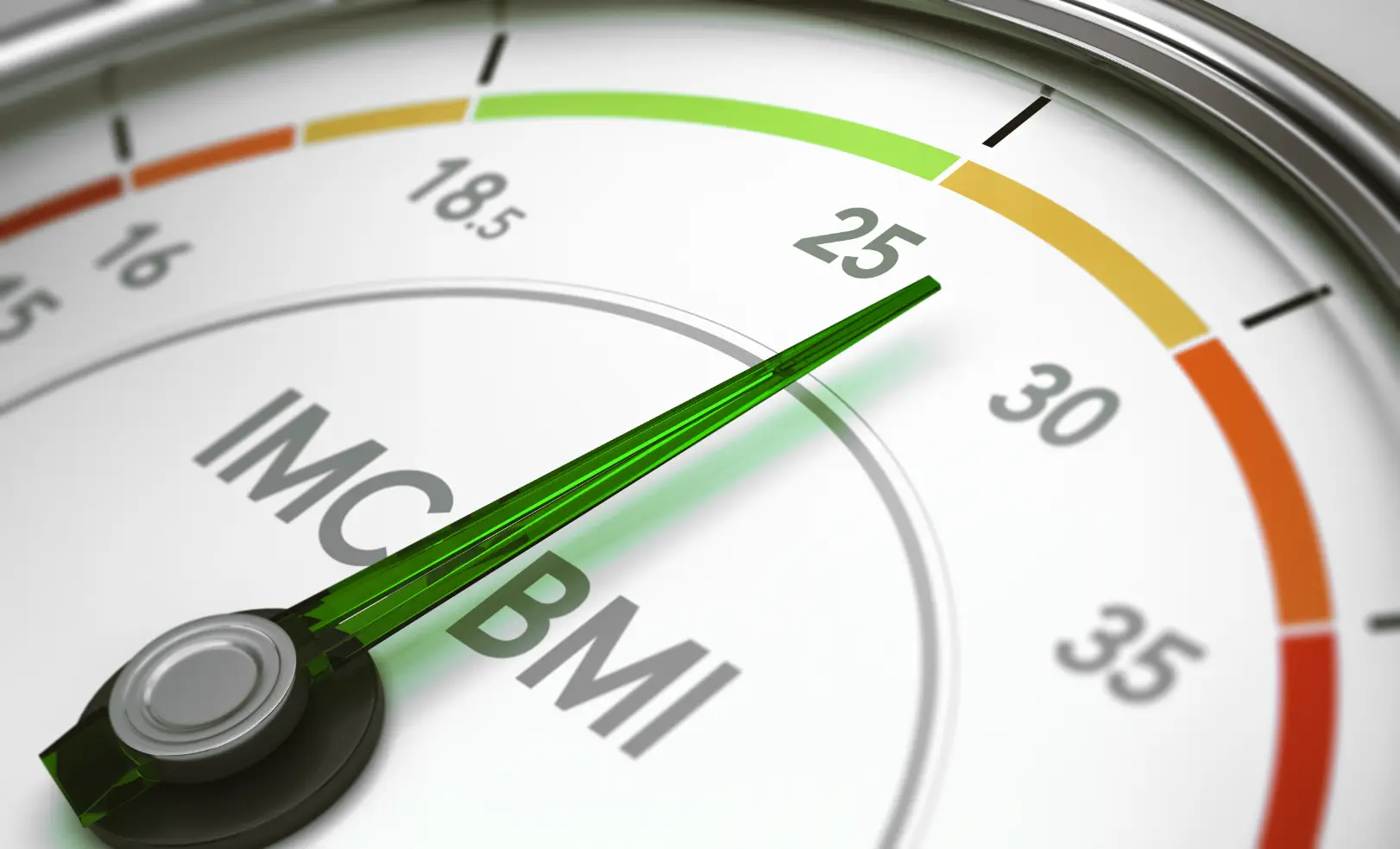
What does BMI actually measure?
Your weight divided by your height squared. That is the entire formula.
It does not know whether the weight is muscle or fat. It does not know where the fat is, which is the part that actually predicts metabolic risk. It does not account for bone density, body frame, or ethnicity, and it performs differently across populations.
It also was not designed for this. BMI was developed in the 1830s by a Belgian mathematician named Adolphe Quetelet, who was studying populations, not diagnosing patients. It was not repurposed as an individual body fat proxy until the 1970s.
None of this is fringe opinion.
What do the major medical bodies say?
In June 2023, the American Medical Association adopted a policy stating that BMI “is significantly correlated with the amount of fat mass in the general population but loses predictability when applied on the individual level.” The AMA recommended using it alongside other measures, including visceral fat, body composition, waist circumference, and metabolic factors.
In January 2025, the Lancet Diabetes and Endocrinology Commission published a report developed by 58 commissioners and endorsed by more than 75 medical organizations worldwide. It proposed that BMI alone is inadequate to diagnose obesity, and it drew a distinction between clinical obesity, where excess adiposity is actually causing organ dysfunction or limiting daily function, and preclinical obesity, where it is not. It recommended confirming excess adiposity with at least one additional measure, such as waist circumference or waist-to-height ratio.
The field has moved. A lot of clinics have not.
So how do we decide?
The same way you would want any physician to decide. By looking at you, not at one number.
At your consultation, our provider evaluates:
– Your full medical history, including conditions that make treatment appropriate and conditions that rule it out
– Body composition, not just body weight. Our Styku 3D scan measures circumference and volume, which tells us far more than the scale does
– Your symptoms and how you actually function
– Contraindications, including personal or family history of medullary thyroid carcinoma or MEN 2, which rule out GLP-1 therapy entirely
BMI is part of that picture. It is not the whole picture, and it is not the gate.
Does that mean anyone can get a prescription?
No. Let us be direct about this.
Not everyone who asks is a candidate. Some patients have contraindications that make GLP-1 therapy inappropriate regardless of what they weigh. Some patients would be better served by addressing something else first. Some patients we decline.
Every prescription we write is a clinical decision made by a licensed provider after evaluating that specific patient. Being evaluated is not the same as being approved.
What we will not do is turn you away because a single ratio put you on the wrong side of a line, without ever looking at your other factors.

What about the FDA labels?
Wegovy and Zepbound are both FDA-approved for adults with a BMI of 30 or higher, or 27 or higher with at least one weight-related condition such as high blood pressure, high cholesterol, type 2 diabetes, obstructive sleep apnea, or cardiovascular disease.
Those are the approved indications, and we follow them. When a physician determines that a medication is appropriate for a patient outside of a labeled indication, that is off-label prescribing, which is legal, common across all of medicine, and requires clinical justification and documentation. It is a medical judgment, not a formality.
What we are describing here is not a workaround. It is careful evaluation of who actually meets criteria, using better tools than a height and weight measurement taken in a hallway.
If you were told no somewhere else
Bring us whatever they told you. Bring your labs if you have them. We will do a real evaluation and give you a real answer, which may still be no.
Consultations are free, and there is no obligation.
References
American Medical Association, AMA Adopts New Policy Clarifying Role of BMI as a Measure in Medicine (June 2023)
The Lancet Diabetes and Endocrinology Commission, Definition and Diagnostic Criteria of Clinical Obesity (January 2025)
https://www.thelancet.com/journals/landia/article/PIIS2213-8587(25)00004-X/fulltext
Wegovy (semaglutide) prescribing information, DailyMed
https://dailymed.nlm.nih.gov/dailymed/drugInfo.cfm?setid=f5e548d0-cc79-4c34-a3f5-e20a5b8b6564
Zepbound (tirzepatide) prescribing information, DailyMed
https://dailymed.nlm.nih.gov/dailymed/drugInfo.cfm?setid=487cd7e7-434c-4925-99fa-aa80b1cc776b
National Institute of Diabetes and Digestive and Kidney Diseases, Prescription Medications to Treat Overweight and Obesity
This information is educational and is not a substitute for medical advice. Treatment decisions are individualized. Not everyone is a candidate for GLP-1 therapy.